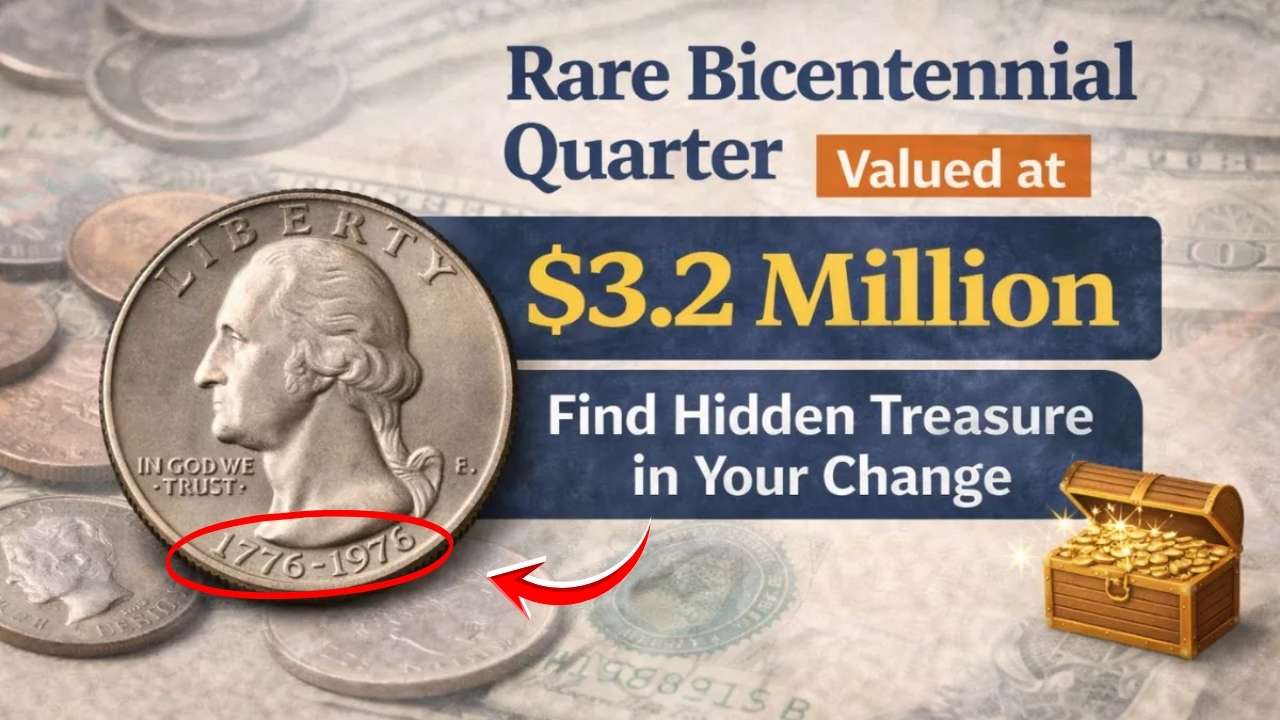
Rare 1976 Bicentennial Quarter Worth $3.2 Million: The 1976 Bicentennial quarter is one of the most recognizable coins in American history. Issued to celebrate 200 years of independence, it features a colonial drummer on the reverse and the dual date 1776–1976 on the obverse. Millions of these quarters were produced, and most are still worth only face value. Yet stories continue to circulate about an extraordinarily rare Bicentennial quarter reportedly valued at $3.2 million. While such a figure sounds unbelievable, understanding the factors that can elevate a common-looking coin into a multimillion-dollar rarity helps explain why this particular example has captured so much attention among collectors.
The Historical Significance of the Bicentennial Quarter
The Bicentennial quarter was part of a special coinage program that included redesigned quarters, half dollars, and dollar coins. It marked a unique moment when the U.S. Mint temporarily changed circulating coin designs to commemorate a national milestone. Because these coins were tied to a major historical event, they attracted attention from both collectors and the general public. This broad interest laid the foundation for long-term demand, especially for unusual or rare variations.
Why Most Bicentennial Quarters Are Common
Between the Philadelphia and Denver mints, hundreds of millions of Bicentennial quarters were struck for circulation. In addition, the San Francisco Mint produced proof and silver-clad collector versions. Due to these high production numbers, the vast majority of Bicentennial quarters are plentiful and easy to find. Circulated examples typically show wear and hold no premium value. This widespread availability is exactly why a truly rare version stands out so dramatically when discovered.
The Role of Extreme Rarity
For a Bicentennial quarter to be valued in the millions, it must possess an extraordinary level of rarity. This usually means the coin is a one-of-a-kind or one-of-only-a-few known examples. In numismatics, rarity is often the most important driver of value. A unique error, experimental strike, or unauthorized planchet can elevate a coin from common to legendary. In the case of the rumored $3.2 million quarter, rarity is believed to be the primary factor behind its valuation.

Possible Minting Errors That Create Massive Value
Some of the most valuable coins in history are the result of minting errors. For a Bicentennial quarter to reach such an extreme value, it would likely involve a dramatic and unusual error. Examples include being struck on the wrong metal, such as gold or an experimental alloy, or being struck on a planchet intended for a completely different denomination. Other possibilities include double strikes, off-metal strikes, or unique die errors that were never meant to leave the mint. When such errors are verified and authenticated, they can command astonishing prices.
Experimental or Prototype Strikes
Another reason a Bicentennial quarter could be worth millions is if it were an experimental or prototype coin. During the 1970s, the U.S. Mint experimented with different metal compositions and production techniques. Coins produced during testing phases were not intended for public release. If a prototype Bicentennial quarter somehow entered private hands, it would represent a piece of hidden mint history. Collectors place immense value on such coins because they offer insight into behind-the-scenes mint operations.

Condition and Preservation
Even the rarest coin must be in exceptional condition to reach a multimillion-dollar valuation. Condition is measured by grading standards that evaluate surface quality, strike sharpness, and overall eye appeal. A flawless or near-flawless Bicentennial quarter with a dramatic rarity factor would be exponentially more valuable than a similar coin with damage or wear. Preservation plays a crucial role in determining whether a rare coin is merely valuable or truly priceless.
Authentication and Professional Grading
For any coin claimed to be worth $3.2 million, authentication is essential. Professional grading services verify a coin’s authenticity, composition, and condition. Without expert confirmation, even the most unusual coin would struggle to gain market acceptance. Once authenticated, the coin’s details are documented, and its uniqueness is recognized within the numismatic community. This formal recognition is often what transforms a rare coin into a headline-making treasure.

Collector Psychology and Demand
High-end coin values are also influenced by collector psychology. Wealthy collectors are often willing to pay extraordinary prices for coins that complete a set, establish prestige, or represent a once-in-a-lifetime opportunity. A unique Bicentennial quarter tied to a major historical event and surrounded by mystery can ignite intense competition among elite collectors. When demand from a small group of passionate buyers meets extreme rarity, prices can soar into the millions.
Myth, Legend, and Market Buzz
Stories of multimillion-dollar coins often gain momentum through media coverage and online discussions. While some claims are exaggerated, others are rooted in real discoveries that are privately held and rarely seen. The $3.2 million Bicentennial quarter has become part of modern numismatic folklore, blending verified facts with speculation. This sense of mystery adds to its allure and keeps collectors searching their change, hoping to uncover something extraordinary.
What This Means for Everyday Collectors
Although the chances of finding a multimillion-dollar Bicentennial quarter are extremely slim, the story highlights an important lesson for collectors. Even common coins can have rare exceptions. Paying attention to unusual features, weights, colors, or strike characteristics can sometimes reveal something special. More importantly, it shows how history, rarity, and human curiosity combine to create lasting value in the world of coin collecting.
Conclusion
The idea of a 1976 Bicentennial quarter worth $3.2 million may sound unbelievable, but it reflects the powerful forces that drive numismatic value. Extreme rarity, unique minting circumstances, pristine condition, and strong collector demand can transform an ordinary-looking coin into a historic treasure. Whether this particular coin is viewed as legend, reality, or somewhere in between, it serves as a reminder that remarkable stories can hide behind even the most familiar designs. For collectors and enthusiasts alike, the Bicentennial quarter remains a symbol of both American history and the enduring excitement of the hunt for rare coins.