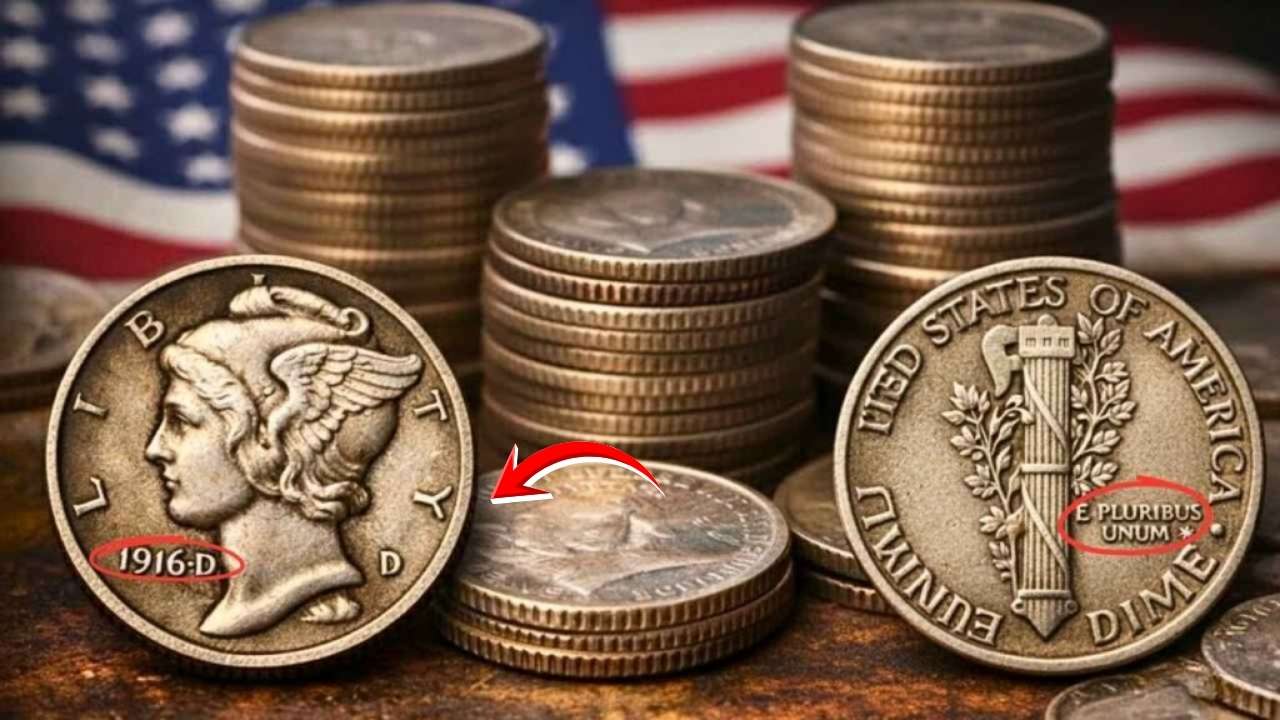
Rare 1916 Mercury Dime Worth $1.1 Million: The 1916 Mercury dime is one of the most iconic and sought-after coins in American numismatics. Officially known as the Winged Liberty Head dime, it features a young Liberty wearing a winged cap, symbolizing freedom of thought, and a fasces with an olive branch on the reverse, representing strength and peace. While many Mercury dimes were minted and remain in circulation or collections today, the 1916 issue, particularly certain mint marks, has achieved legendary status among collectors. A rare 1916 Mercury dime reportedly valued at $1.1 million demonstrates how historical significance, rarity, and collector demand can combine to create extraordinary value.
Historical Context of the 1916 Mercury Dime
The Mercury dime was designed by Adolph A. Weinman and released in 1916, replacing the Barber dime that had been minted since 1892. The release coincided with a period of artistic innovation in U.S. coinage, known as the Renaissance of American Coin Design. The 1916 Mercury dime was produced at three mints: Philadelphia, Denver, and San Francisco. The coin’s historical context and artistic appeal have made it an enduring favorite, but the 1916 issue is particularly notable for its low mintage at Denver and the quality of surviving examples.
Understanding the Rarity of the 1916 Mercury Dime
Among the 1916 Mercury dimes, the Denver-minted (1916-D) issue is exceptionally rare. Only 264,000 were struck, making it the key date of the Mercury dime series. Most of the coins entered circulation and were heavily used, leaving few surviving in high-grade condition. The combination of low original mintage, historical significance, and demand from collectors contributes directly to its substantial market value. While Philadelphia and San Francisco coins from 1916 are relatively common, the 1916-D Mercury dime commands attention and admiration from numismatists worldwide.
Condition and Grading Impact Value
The condition of a 1916 Mercury dime significantly affects its market value. Coins are graded on a scale from 1 to 70, with higher grades indicating better preservation and sharper detail. Circulated 1916-D dimes can still be valuable, but uncirculated or mint state examples can reach extraordinary prices. Coins in MS65 (Mint State 65) or higher condition are extremely rare and highly sought after. A perfect or near-perfect 1916 Mercury dime can sell for hundreds of thousands, or in exceptional cases, over a million dollars, especially when authenticated by a reputable grading service.

The Role of Mint Marks in Collector Value
Mint marks play a critical role in determining the rarity and value of Mercury dimes. The 1916-D, produced at the Denver Mint, is the key date and represents the most limited production among the 1916 releases. The 1916-S from San Francisco and the 1916-P from Philadelphia were struck in much higher numbers, making them more common. Collectors prioritize acquiring key date coins with strong strikes and excellent preservation, which contributes to the 1916-D Mercury dime’s status as a highly prized numismatic treasure.
Market Demand and Auction Records
Over the past decades, the 1916-D Mercury dime has consistently achieved impressive results at auctions. High-grade examples often attract competitive bidding from collectors and investors alike, driving prices higher. The reported $1.1 million valuation reflects both scarcity and the strong demand for top-quality examples. Auction records for this coin series indicate that condition, certification, and provenance are key factors that influence final sale prices. As such, even coins that appear modest to an untrained eye can command extraordinary sums when they are rare and well-preserved.

Professional Grading and Authentication
Professional grading services have a critical role in establishing the value of rare Mercury dimes. Coins submitted for certification are examined for authenticity, condition, and potential cleaning or alterations. A certified 1916-D in high grade provides collectors and investors with confidence in the coin’s quality and provenance. Graded coins often fetch significantly higher prices than raw coins, particularly in competitive auctions where provenance and verified condition are essential.
Collector Strategies for Acquiring Rare Dimes
Collectors seeking rare 1916 Mercury dimes must be vigilant. Finding high-grade examples often requires careful inspection of collections, rolls, and auctions. Networking with experienced dealers and participating in coin shows can provide access to rare coins. Understanding subtle differences, such as strike quality and toning, helps collectors identify examples with exceptional eye appeal. For investors, focusing on certified coins from reputable grading services is recommended to reduce the risk of overpaying or acquiring a counterfeit.
The Broader Significance of the 1916-D Mercury Dime
Beyond its monetary value, the 1916-D Mercury dime represents a critical chapter in American numismatic history. It reflects the artistic innovation of the early twentieth century and commemorates a transitional era in U.S. coinage. The coin’s scarcity and historical significance contribute to its mystique, attracting both experienced collectors and new enthusiasts. The story of a rare example valued at $1.1 million captures the imagination of the numismatic community and highlights the potential for historical coins to transcend their face value.
Future Market Outlook
The future for 1916 Mercury dimes, particularly the 1916-D, appears strong. As interest in historical American coins continues and high-grade examples remain scarce, demand is expected to persist. Coins with verified high grades and clear provenance will likely continue to achieve premium prices in auctions and private sales. While the overall coin market fluctuates with economic trends, key date coins like the 1916-D Mercury dime have demonstrated long-term resilience and collector appeal.
Conclusion
The 1916 Mercury dime, especially the Denver-minted example, remains one of the most coveted coins among American numismatists. Its combination of rarity, historical importance, and artistic design contributes to its remarkable value. The reported $1.1 million valuation underscores the impact of scarcity, condition, and collector demand in shaping coin prices. For both collectors and investors, understanding the factors behind the 1916-D Mercury dime’s worth provides insight into the broader world of rare coin collecting. This coin is more than a piece of currency it is a symbol of American history, craftsmanship, and the excitement of discovering numismatic treasures.