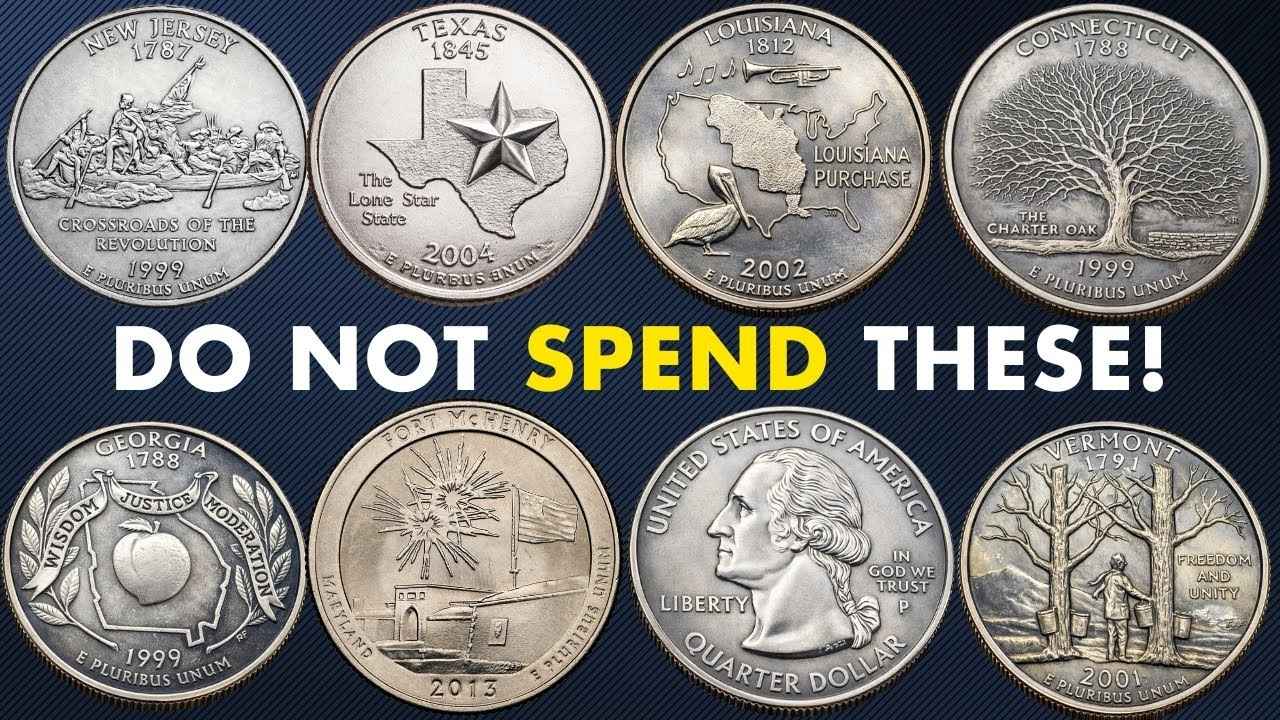
2026 State Quarters Value Guide: The state quarters program, launched by the United States Mint in 1999, captured the imagination of collectors and casual savers alike. Over a ten-year period, each state released a unique quarter celebrating its heritage and culture. The series came to an official close in 2008, but today these coins continue to circulate and sometimes hold surprising value. While most state quarters are worth only face value, a handful can fetch hundreds of dollars or more depending on rarity, condition, and unique characteristics. This guide explores the world of state quarter collecting, highlights notable varieties, and offers insight into how values have developed over time.
Understanding State Quarter Basics
The state quarters program was created as a way to boost public interest in coin collecting and to celebrate America’s diverse history. Each of the 50 states received its own design on the reverse of the quarter, while the obverse featured the familiar profile of George Washington. These coins were minted at the Philadelphia and Denver facilities, with some years also seeing proof versions struck at San Francisco. Because millions of state quarters were produced and widely used in everyday transactions, most common dates remain inexpensive collectors’ items. However, certain issues have attracted attention from enthusiasts due to errors, low mintages, or unique production traits.
Why Some Quarters Become Valuable
Most state quarters remain worth only their face value of twenty-five cents, especially in circulated condition. However, coins that are extremely rare, in uncirculated condition, or display mint errors can be worth significantly more. A coin’s grade, which measures its physical condition, plays a major role in determining value. Coins that have never been handled, retain full luster, and display sharp details are sought after by collectors. Additionally, errors or unusual varieties, such as double dies or off-center strikes, can transform an ordinary quarter into a noteworthy collectible.
Key Dates and Varieties to Watch For
Certain state quarters stand out for their market value potential. For example, the 2004-D Wisconsin extra leaf varieties gained early collector attention. These coins feature a tiny extra leaf on the ear of corn, creating two distinct varieties known as the high leaf and low leaf. Early examples that surfaced online and through word of mouth became popular with collectors and sparked ongoing interest in subtle minting variations.

Another notable issue is the 1999-P Delaware quarter. While not originally rare in high numbers, select specimens from early minting stages sometimes show striking differences or die polish lines that can interest specialists. Although not commanding extremely high values compared with classic rarities, quality examples in perfect condition can attract buyers.
Mint Errors That Add Value
Mint errors have a special place in the world of state quarter collecting. These errors occur when something unusual happens during the production process. Some of the more interesting errors include off-center strikes, where part of the design is missing because the planchet was not properly aligned; planchet clips, where a portion of the blank metal is missing; and doubled dies, where the design appears to be duplicated or shadowed due to issues in the die-making process. While not all errors are valuable, those that are dramatic and visually appealing often command premiums among collectors.

The Role of Coin Grading Services
Professional coin grading services have greatly influenced the market for state quarters. These organizations evaluate a coin’s condition, assign a grade on a numerical scale, and encapsulate the coin in a protective holder. A high grade can significantly boost a coin’s value compared to the same issue in lower condition. For rare or near-perfect state quarters, certification is often essential for establishing market value and buyer confidence. Collectors should familiarize themselves with the grading process and consider professional evaluation for coins that appear to be exceptional.
Value Ranges for State Quarters
State quarters generally fall into a broad range of values depending on their condition and rarity. At the bottom of the scale, circulated quarters without notable characteristics typically remain worth around $0.25. These coins are common and easy to find in pocket change or coin rolls. Many collectors still enjoy gathering complete state sets even if the individual coins do not carry significant value.
In the mid-range, uncirculated state quarters with strong luster and eye appeal can be worth a few dollars to several dozen dollars. Coins graded at higher levels by professional services tend to sit in this category. Quality examples from popular states or early years of the program often draw more interest.
At the upper end of the spectrum, rare varieties and exceptional coins can reach $500 or more at auction or private sale. High grades, noteworthy errors, and limited-run varieties contribute most to these elevated values. These coins often require careful searching through rolls, expert eye recognition, and sometimes a bit of luck to uncover.
Tips for Finding Valuable Quarters
Collectors often find valuable state quarters through coin roll hunting, attending coin shows, or trading with other enthusiasts. Carefully examining circulated quarters for unusual features, sharp details, or unexpected weight and appearance can sometimes reveal a hidden gem. Handling coins with clean hands and using quality magnification can help reveal subtle varieties and errors that might otherwise be overlooked.
Online marketplaces and social media groups also provide platforms for collectors to buy, sell, and learn about state quarter varieties. Engaging with the collecting community can expand a collector’s knowledge and provide opportunities to find rare coins for trade or purchase.
Investing in State Quarters
While many collectors pursue state quarters for enjoyment, others consider them an investment. Like all collectibles, coin values can fluctuate over time based on supply, demand, and broader economic conditions. Rare state quarters in high grades may appreciate in value, but collecting should not be viewed solely as a financial strategy. Understanding market trends, seeking expert opinions, and collecting coins that hold personal interest help create a sustainable and enjoyable pursuit.
Future Outlook for Collectors
The state quarters program remains a landmark in U.S. numismatic history, and interest in these coins persists years after the series concluded. As new collectors enter the hobby and experienced enthusiasts continue to pursue advanced varieties, demand for rare state quarters is likely to remain strong. Chapters in coin collecting publications, online forums, and local hobby clubs will continue to share insights and discoveries about state quarter values.
Conclusion
The 2026 state quarters value guide highlights the range of possibilities that exist within this iconic series. While most state quarters remain worth face value, a small number hold significant value due to condition, rarity, and unique features. From the subtle variations in the Wisconsin extra leaf coins to dramatic mint errors and high-grade uncirculated examples, collectors have plenty to explore and enjoy. Whether you are just starting out or building a specialized collection, understanding the nuances of state quarter values can enhance your appreciation of these small but fascinating pieces of American history.