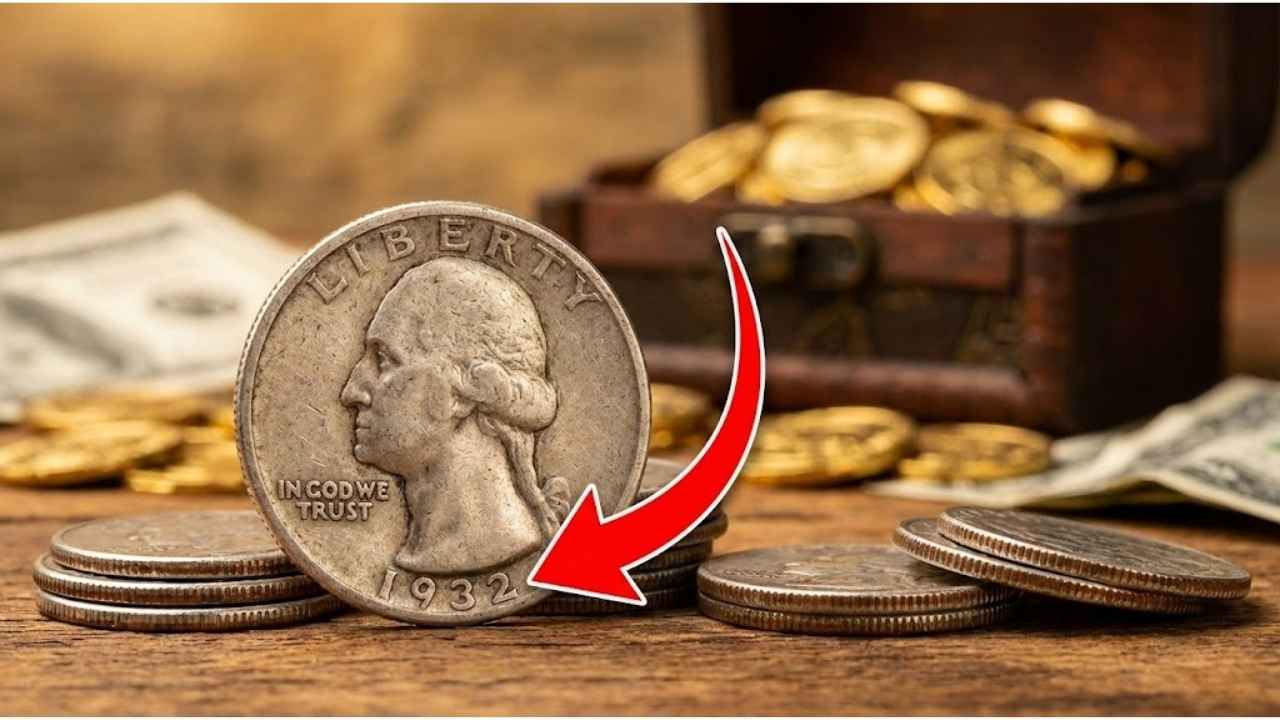
10 Valuable Washington Quarters: The Washington quarter is one of the most recognizable and widely circulated coins in United States history. First released in 1932 to commemorate the 200th birthday of George Washington, this coin quickly became a permanent part of American currency. For decades, Washington quarters passed from hand to hand in everyday transactions, leading many people to assume they hold little value beyond face worth. However, this assumption is far from the truth. Certain Washington quarters are extremely rare and highly valuable due to low mintages, historical importance, striking errors, or exceptional preservation. Some of these coins have sold for tens of thousands of dollars, with top specimens approaching values of $80,000. Below are ten Washington quarters that stand out as true numismatic treasures.
1932-D Washington Quarter
The 1932-D Washington quarter is considered the most important key date in the entire series. Produced at the Denver Mint during the coin’s first year of issue, it had a remarkably low mintage. The early 1930s were marked by the Great Depression, and many of these quarters entered circulation immediately to meet everyday needs. As a result, most surviving examples show heavy wear. Finding one in mint condition is extremely difficult. Collectors place enormous value on sharply struck examples with original luster, and top-grade coins can sell for extraordinary prices at auction.
1932-S Washington Quarter
The San Francisco Mint also produced a limited number of Washington quarters in 1932, making the 1932-S another highly sought-after rarity. Like the Denver issue, these quarters were heavily circulated during hard economic times. This scarcity in high-grade condition has made the 1932-S a cornerstone coin for collectors attempting to complete a full Washington quarter set. Exceptional examples are rare and consistently command strong prices in the numismatic market.
1934 Washington Quarter with Doubled Die Obverse
In 1934, a small number of Washington quarters were struck using a doubled die obverse. This error occurred during the die-making process, resulting in visible doubling on the date and lettering. Unlike minor flaws that require magnification, the doubling on this coin can often be seen with the naked eye. Error coins like this attract strong interest because they represent mistakes that escaped the mint’s quality control. High-grade examples of the 1934 doubled die quarter are scarce and highly valued.
1937 Washington Quarter with Proof-Like Surfaces
Although not officially designated as proof coins, some 1937 Washington quarters were struck with exceptionally smooth dies and careful handling. These coins exhibit proof-like surfaces, featuring reflective fields and sharp details. Because they were not intentionally produced as proofs, their existence is rare and somewhat mysterious. Collectors prize these quarters for their unusual appearance and limited availability, particularly when they are well preserved.
1943 Washington Quarter Struck on an Error Planchet
World War II placed enormous demands on the U.S. Mint, increasing the likelihood of minting errors. One of the most dramatic involves a 1943 Washington quarter struck on an incorrect planchet. These coins may differ in color, weight, and thickness from standard quarters. Such errors were never meant to leave the mint, making surviving examples exceptionally rare. Error collectors are willing to pay significant sums for authenticated pieces.

1950-D Over S Washington Quarter
During the mid-20th century, mint marks were punched onto coin dies by hand. This process sometimes resulted in errors, such as one mint mark being stamped over another. The 1950-D over S Washington quarter is a prime example. On this coin, traces of the San Francisco mint mark can be seen beneath the Denver mark. This variety is popular among collectors because it offers insight into historical minting practices. Clear, high-grade examples are scarce and valuable.
1964-D Washington Quarter with Doubled Die Features
The year 1964 marked the final year that Washington quarters were made from 90 percent silver. Millions were struck as silver prices rose and people began hoarding coins. Among these issues, some 1964-D quarters display doubled die characteristics, especially in the lettering and Washington’s portrait. While many coins from this year survive, error examples in excellent condition are difficult to find. Certified high-grade specimens can bring impressive prices.
1970-S Washington Quarter Struck on a Nickel Planchet
One of the most fascinating Washington quarter errors involves a 1970-S coin struck on a nickel planchet. This error resulted in a coin that is noticeably lighter and slightly smaller than a normal quarter. Because the error is so obvious, it attracts strong interest from collectors. Only a handful of authenticated examples are known, making this one of the rarest modern Washington quarter errors.
1983-P Washington Quarter in Exceptional Condition
Most people overlook quarters from the 1980s, but the 1983-P Washington quarter is a notable exception. That year, very few uncirculated coins were saved, and official mint sets were not widely produced. As a result, finding a 1983-P quarter in mint state condition is surprisingly difficult. Coins that receive top grades from professional grading services have sold for surprisingly high amounts due to their rarity.
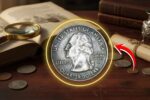
1999-P Delaware Quarter with Experimental Alloy
The State Quarters program launched in 1999 brought renewed interest in U.S. coin collecting. During this period, the mint experimented with different metal compositions. A small number of 1999-P Delaware quarters were struck using an experimental alloy and were not intended for public circulation. These coins differ slightly in weight and appearance from standard quarters. Because they were never officially released, authenticated examples are extremely rare and valuable.
1936 Proof Washington Quarter
Proof Washington quarters from the 1930s were produced in limited quantities for collectors and dignitaries. The 1936 proof quarter is particularly desirable due to its sharp strike, deep mirrored fields, and historical significance. Over the decades, many proof coins were mishandled or improperly stored, reducing the number of pristine survivors. High-grade examples are among the most valuable Washington quarters ever sold.
Conclusion
Washington quarters may appear to be ordinary coins, but certain examples tell remarkable stories of history, craftsmanship, and human error. From low-mintage Depression-era issues to dramatic minting mistakes and pristine proof coins, these quarters demonstrate how value can far exceed face worth. Whether you are a seasoned collector or someone casually checking old change, Washington quarters deserve a closer look. One rare coin, tucked away in a drawer or inherited collection, could be a hidden treasure worth as much as $80,000.