Top 8 Rare Roosevelt Dimes Worth Thousands in 2026: The Roosevelt dime is one of the most recognizable coins in the United States. Introduced in 1946 to honor President Franklin D. Roosevelt shortly after his death, this coin has been in continuous circulation for decades. While most Roosevelt dimes are considered ordinary, a handful are extraordinarily valuable, often worth thousands of dollars to collectors. In 2026, these rare dimes remain highly sought after due to their rarity, condition, historical significance, or unusual mint errors. This comprehensive guide explores eight of the rarest Roosevelt dimes, how to identify them, and what makes them so valuable to collectors.
The Appeal of Roosevelt Dimes
Roosevelt dimes are often overlooked by casual collectors, but their appeal is undeniable. Early silver issues, rare minting errors, and high-grade coins attract serious collectors because they combine historical significance with potential investment value. Unlike some collectible coins that are difficult to find in circulation, Roosevelt dimes have a long production history, making the series accessible yet challenging for those seeking rare examples.
The factors that contribute to a dime’s value include rarity, mint mark, condition, silver content, and any errors or unusual characteristics. Dimes minted before 1965 are composed of 90 percent silver, giving them intrinsic value in addition to collector demand. Coins that are rare, in exceptional condition, or contain notable errors can fetch prices far above their face value, sometimes reaching thousands of dollars.
How Collector Value Is Determined
When assessing the value of a Roosevelt dime, several key factors must be considered:
- Rarity: Coins minted in low quantities or with limited survival rates are inherently more valuable.
- Condition: Coins are graded based on wear, strike quality, and eye appeal. Uncirculated dimes with full luster and sharp details are worth significantly more than circulated examples.
- Mint Errors and Varieties: Coins with doubled dies, missing mint marks, or off-center strikes are considered errors and can command premium prices.
- Silver Content: Pre-1965 dimes contain 90 percent silver, providing a base intrinsic value that supports market demand.
- Historical Importance: Early Roosevelt dimes, especially first-year issues, have historical significance that increases collector interest.
Understanding these factors helps collectors evaluate potential investments and identify coins worth preserving.
1946 Roosevelt Dime: The First Year of Issue
The 1946 Roosevelt dime is historically significant as the very first year of issue. Released shortly after Roosevelt’s death, it commemorated his legacy, particularly his work with the March of Dimes to combat polio.

Although millions were minted, most circulated heavily, leaving few high-grade examples today. A 1946 dime in mint condition with full luster and sharp details is rare and highly valuable. Collectors often seek coins with original surfaces and minimal handling, as these are the most visually appealing and command premium prices.
1949-S Roosevelt Dime
The 1949-S Roosevelt dime, minted in San Francisco, is one of the lowest mintage coins in the series. Its scarcity makes it highly desirable to collectors aiming to complete a Roosevelt dime collection.
Even circulated examples can carry value, but uncirculated coins with clean surfaces and sharp design details are particularly valuable. The 1949-S dime exemplifies how low production numbers combined with condition can dramatically increase a coin’s worth in 2026.
1950 Roosevelt Dime With Full Torch Details
Collectors often focus on the reverse of the Roosevelt dime, where the torch, olive branch, and oak branch are depicted. Coins with fully detailed torch bands are considered superior and often command higher prices.
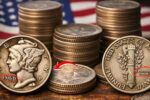
The 1950 Roosevelt dime is notable because many coins from this year were weakly struck, resulting in incomplete details on the torch. High-grade examples showing full horizontal bands across the torch are rare. Such coins are highly sought after and can sell for thousands of dollars, especially when certified by professional grading services.
1955 Roosevelt Dime Doubled Die Error
Doubled die errors are among the most dramatic and collectible mint mistakes. They occur when the die used to strike a coin is misaligned during creation, resulting in visible doubling on the date or lettering.
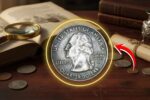
The 1955 Roosevelt dime doubled die error is particularly famous. Doubling is most noticeable on the date and the word “LIBERTY,” making the coin easy to identify for collectors. High-grade examples are extremely scarce, and demand is strong, often driving values into the thousands.
1964-D Roosevelt Dime in Exceptional Condition
The 1964-D Roosevelt dime was part of the last year of 90 percent silver dimes produced before the switch to a copper-nickel clad composition. While millions were minted, many entered circulation and were heavily worn, or were later melted down for silver.
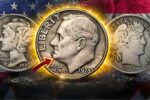
Finding a 1964-D dime in near-perfect condition is challenging. Coins with full mint luster, sharp strike details, and minimal surface marks are rare. Because this was a common date in low-grade circulation, the value of high-grade examples can be remarkable. Full torch details and strong strike quality significantly increase the coin’s worth in 2026.
1968 No S Proof Roosevelt Dime
Proof coins are produced with extra care for collectors, featuring highly polished fields and sharp details. In 1968, the U.S. Mint produced Roosevelt dimes at the San Francisco Mint with the “S” mint mark. However, a small number of dimes were accidentally struck without the mint mark, creating one of the most sought-after modern Roosevelt dime rarities.
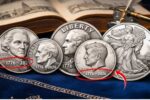
The 1968 no S proof dime was never intended to exist, making it extremely rare. Collectors prize these coins for their uniqueness and historical significance. Certified examples can reach tens of thousands of dollars in 2026, highlighting their status as one of the most valuable Roosevelt dime varieties.
1975 No S Proof Roosevelt Dime
Similar to the 1968 error, the 1975 no S proof Roosevelt dime is another modern rarity. Proof coins from this year should carry the San Francisco “S” mint mark, but a few were released without it.
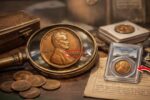
Only a small number are known to exist, making them exceedingly rare and highly desirable. Collectors continue to pay premium prices for these coins, especially when graded in high condition. The 1975 no S proof dime is an important reminder that even modern Roosevelt dimes can hold extraordinary value.
1982 Roosevelt Dime Without Mint Mark
In the early 1980s, changes in minting procedures led to a small number of Roosevelt dimes being released without mint marks. The 1982 no-mint-mark dime is one of the more well-known examples of this modern error.
These coins are scarcer than standard issues and are often overlooked by casual collectors. High-grade examples are particularly valuable, especially when certified for authenticity. Modern errors like this show that valuable Roosevelt dimes are not limited to early silver issues, keeping collector interest strong in 2026.
How to Identify Rare Roosevelt Dimes
Identifying rare Roosevelt dimes requires careful inspection and knowledge. Collectors should start with the date and mint mark, paying attention to low-mintage issues, early years, and proof coins. The condition of the coin is critical, so it is important to look for sharp details, strong luster, and minimal wear.
Magnification can help detect doubled die features, missing mint marks, or unusual strike characteristics. Torch details on the reverse are also a key identifier for high-grade dimes. For coins suspected of being rare or valuable, professional grading and authentication are essential to verify legitimacy and protect the coin’s market value.
Tips for Collecting Roosevelt Dimes in 2026
Collecting Roosevelt dimes today requires a mix of research, patience, and careful handling. Beginners can start by identifying key dates or silver issues, while more advanced collectors might seek full torch details or proof errors.
Proper storage is essential to preserve a coin’s condition. Coins should be kept in protective holders, away from humidity, direct sunlight, and handling. Never clean valuable coins, as cleaning can drastically reduce their collector value. Staying informed about the market and trends in numismatics is also critical for identifying rare coins before they become widely known.
Collectors should also take advantage of resources such as professional coin grading services, numismatic guides, and online collector communities. These tools can help verify authenticity, establish value, and provide guidance for building a valuable Roosevelt dime collection.
Why These Eight Roosevelt Dimes Are Worth Thousands
The eight Roosevelt dimes highlighted in this guide—1946, 1949-S, 1950 full torch, 1955 doubled die, 1964-D in high grade, 1968 no S proof, 1975 no S proof, and 1982 no-mint-mark—represent some of the most valuable coins in the series. Each one is rare for a unique reason, whether due to low mintage, historical significance, mint errors, or exceptional condition.
When considered together, these dimes can easily be worth thousands of dollars, even in modest grades. Collectors in 2026 continue to seek them, driving market demand and sustaining strong prices. The combination of historical appeal and financial value makes Roosevelt dimes an attractive focus for both new and experienced collectors.
Conclusion
The Roosevelt dime may seem like a small, everyday coin, but it contains a wealth of collectible potential. From low-mintage silver issues to proof errors and modern mint mistakes, the series offers coins that are not only historically significant but also financially valuable. The eight dimes outlined in this guide represent the pinnacle of collectible Roosevelt dimes, and understanding how to identify, evaluate, and preserve them is key for serious collectors. In 2026, these rare dimes remain in high demand, offering the possibility that a simple coin from your pocket or collection could be worth thousands of dollars and become a cherished numismatic treasure.