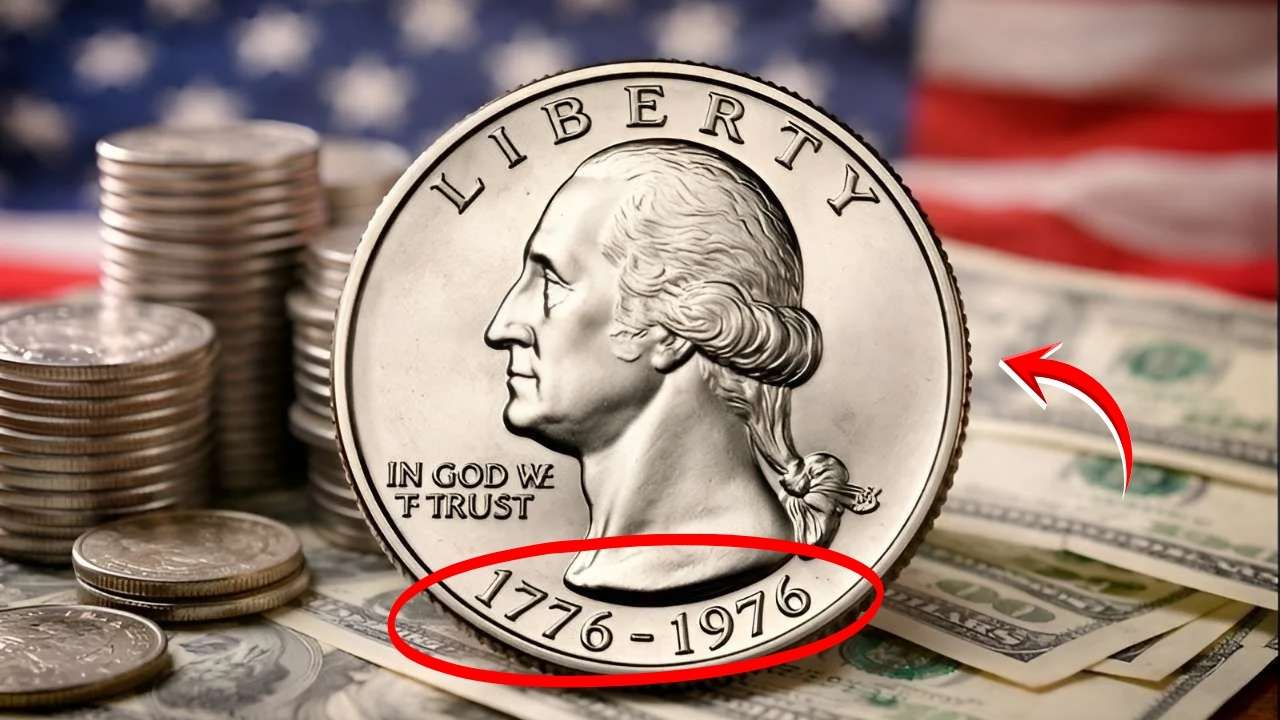
Bicentennial Quarter 2026 Value Guide: The Bicentennial quarter is one of the most recognizable coins ever produced by the United States Mint. Released to celebrate America’s 200th anniversary, this special quarter carries a unique design that instantly sets it apart from regular issues. For many people, it is simply a nostalgic reminder of the 1970s. For collectors, however, the Bicentennial quarter has become an increasingly interesting coin, especially in 2026, as certain examples are now valued at more than 500 dollars. Understanding why some of these quarters are worth far more than face value can help collectors and everyday coin holders uncover hidden value.
The History Behind the Bicentennial Quarter
The Bicentennial quarter was introduced in 1975 and 1976 to commemorate 200 years of American independence. Instead of a single year date, these quarters feature the dual date 1776–1976. The U.S. Mint temporarily changed the reverse design to mark the historic event, making this coin the first circulating U.S. quarter to feature a special commemorative design.
The reverse depicts a colonial drummer with a victory torch surrounded by thirteen stars, symbolizing the original colonies. The obverse retained George Washington’s portrait, maintaining continuity with earlier quarters. Millions of Bicentennial quarters were produced, which is why many people assume they are all common. However, not all Bicentennial quarters are created equal.
Types of Bicentennial Quarters Issued
The U.S. Mint produced Bicentennial quarters at three facilities: Philadelphia, Denver, and San Francisco. Philadelphia and Denver struck coins intended for circulation, while San Francisco produced both proof coins and special collector issues.

Most Bicentennial quarters were struck in a copper-nickel clad composition, the same metal used for regular quarters after 1965. However, the San Francisco Mint also issued special 40 percent silver versions specifically for collectors. These silver coins were not released into general circulation, making them far scarcer today.
Why Some Bicentennial Quarters Are Valuable in 2026
The value of a Bicentennial quarter depends on several key factors, including composition, condition, rarity, and collector demand. While common circulated examples are still worth face value, uncirculated and special mint issues have gained attention in recent years.

By 2026, collector interest has grown as more people recognize that high-quality examples are harder to find than once believed. Many Bicentennial quarters were heavily circulated, leading to wear and damage. Coins that survived in pristine condition are now much scarcer, increasing their value significantly.
Silver Bicentennial Quarters and Their Worth
One of the most important distinctions is whether a Bicentennial quarter is silver. The 40 percent silver versions were sold in special mint sets and proof sets, mainly through the San Francisco Mint. These coins were never intended for everyday use, which helps explain their higher value.
In average condition, silver Bicentennial quarters are worth more than their copper-nickel counterparts due to their silver content alone. In uncirculated or proof condition, especially with strong luster and sharp details, their value can climb well above 100 dollars. Exceptional examples graded at the highest levels have sold for over 500 dollars, particularly when demand is strong.
High-Grade Circulation Strikes Worth Over $500
Surprisingly, even non-silver Bicentennial quarters can be valuable if they are in outstanding condition. Coins graded in near-perfect or perfect mint state are extremely rare because most circulation strikes were used extensively.
High-grade examples with clean surfaces, sharp strikes, and no visible wear can command impressive prices at auction. Coins graded at the top of the scale by professional grading services have sold for hundreds of dollars, and in some cases, over 500 dollars. These prices reflect rarity in condition rather than age or metal content.
Rare Errors That Increase Value
Mint errors play a major role in making certain Bicentennial quarters valuable. Errors occur when something goes wrong during the minting process, creating a coin that differs from standard production.
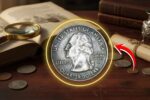
Popular errors include off-center strikes, where part of the design is missing, and doubled die varieties, where lettering or design elements appear doubled. Clipped planchets, which result in a coin with a missing section, are also desirable.
Another rare and valuable category includes quarters struck on the wrong planchet. These errors are dramatic and easy to recognize, making them highly sought after by collectors. Error Bicentennial quarters in strong condition can easily exceed 500 dollars in value.
Proof Bicentennial Quarters and Collector Demand
Proof Bicentennial quarters were specially made for collectors using polished dies and planchets. These coins have mirror-like backgrounds and sharp details, making them visually striking. Proofs from the San Francisco Mint are especially popular.
In 2026, proof Bicentennial quarters with deep cameo contrast are among the most desirable. Coins that have been well preserved, without scratches or clouding, can sell for premium prices. Graded proof coins in top condition continue to attract strong interest in the collector market.
How to Identify a Valuable Bicentennial Quarter
Identifying a valuable Bicentennial quarter begins with checking the date and reverse design. All Bicentennial quarters display the 1776–1976 date and the drummer reverse. Next, examine the mint mark. An S mint mark often indicates a proof or silver issue, though further inspection is needed to confirm composition.
Weighing the coin can help determine whether it is silver, as silver quarters are slightly heavier. Inspect the coin’s condition carefully, looking for sharp details, clean surfaces, and minimal wear. Using magnification can help reveal errors or doubled features.
Collecting Bicentennial Quarters in 2026
In 2026, collecting Bicentennial quarters remains appealing due to their historical significance and growing market interest. Some collectors focus on complete sets, including circulation strikes, proofs, and silver issues. Others specialize in high-grade or error coins, where the greatest values are often found.
Proper storage is essential to preserve value. Coins should be kept in protective holders and never cleaned, as cleaning can permanently damage surfaces and reduce worth.
Conclusion
The Bicentennial quarter is far more than a common piece of pocket change. While millions were produced, a select number stand out due to their silver content, exceptional condition, or rare errors. In 2026, these factors have pushed the value of certain Bicentennial quarters well beyond 500 dollars. For collectors and curious coin holders alike, taking a closer look at this iconic 25-cent coin could lead to an exciting and valuable discovery.